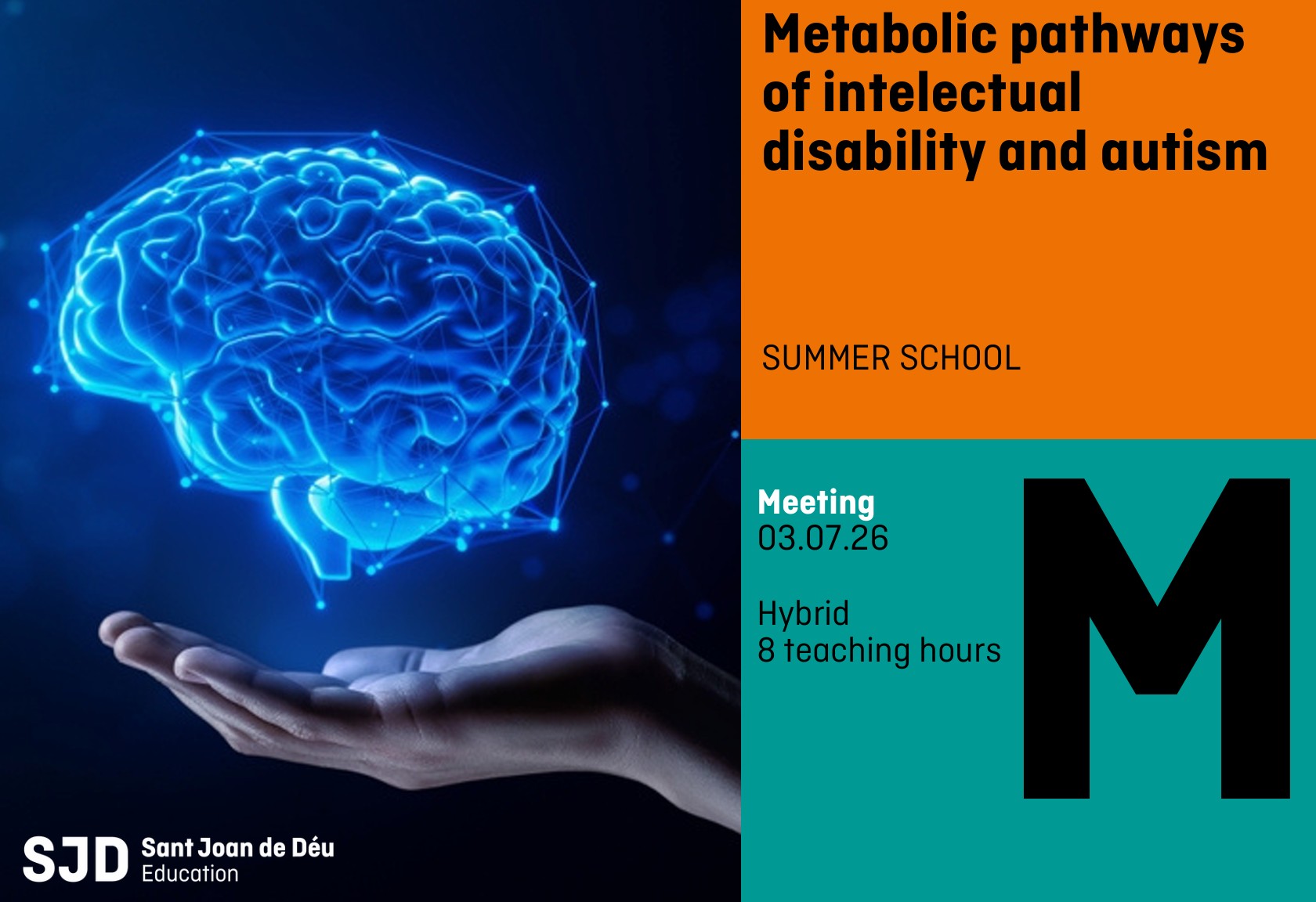
Metabolic pathways of intellectual disability and autism
3 July 2026 – Barcelona, Spain & Virtual
Symposium SJD: Metabolic pathways of intellectual disability and autism
Website and registration
Programme
We are pleased to share this symposium, centred on autism and entitled Metabolic Pathways of Intellectual Disability and Autism. The programme includes presentations covering the latest research into the pathophysiological mechanisms of autism — such as metabolism in the developing brain and RNA regulation in neurodevelopment — as well as more specific topics including the energy metabolism of cognition, metabolic pathways involved in neurodevelopmental disorders, and the role of synaptic metabolism in brain circuit function. These sessions will be delivered by internationally recognised experts in the field.
The participation of professionals from psychiatry, psychology, and all those working within child and adolescent mental health services, early intervention centres, and other mental health settings will enrich the exchange of knowledge and provide a valuable translational perspective, while also fostering future collaborations.
Metabolism and neurodevelopment: understanding intellectual disability and autism
This course provides an integrated overview of the metabolic mechanisms involved in intellectual disability (ID) and autism spectrum disorder (ASD). Through contributions from leading international experts, participants will explore how cellular metabolism, energy dynamics, and molecular pathways influence brain development, synaptic function, and neurodevelopmental outcomes.
Moving beyond the traditional emphasis on rare inborn errors of metabolism, the program presents metabolic dysfunction as a shared and convergent dimension across a broad range of neurodevelopmental disorders. This integrative perspective helps bridge advances in basic science with everyday clinical practice, offering a coherent framework to better understand the biological basis of ID and ASD.
The topic addresses a pressing international need to understand the biological mechanisms of ID and ASD beyond traditional diagnostic silos. The symposium brings together leading experts from Spain, France, Austria, Argentina, Canada, and Hong Kong, reflecting a global effort to tackle this challenge. This international faculty ensures a diversity of perspectives and aligns the program with current global research trends in systems biology, single-cell genomics, and metabolic reprogramming.